
Drug, Alcohol, and Gambling Addictions: Similarities and Differences
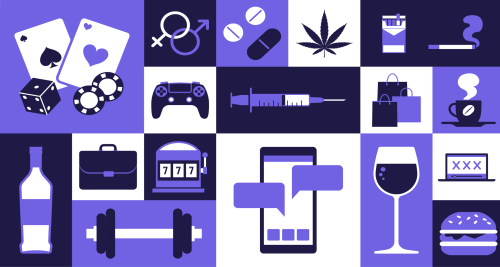
The DSM-5 placed gambling disorder in the same section as substance use disorders as the past decade of research supported many similarities between substance addictions and gambling disorder as a “behavioral addiction.” Yet, despite many similarities between these addictive disorders, there are significant differences that are important to understand for diagnostic, treatment, and support of our problem gambling patients. On March 6, I will be doing a comprehensive webinar to talk about the similarities and differences.
However, I thought it advantageous to highlight one of the more nuanced similarities—craving—that also has a caveat of being a difference. At first that sounds a little contradictory, but it will make sense as you keep reading.
In the DSM-5, craving is defined as an intense desire or urge to use a substance, often characterized as a; “ pressing desire to use the substance.” When working with patients, I will typically characterize a craving as a strong desire to re-experience the effect of a substance or behavior that is strong enough to make them want to engage in their addictive behavior. When asked about the difference between a craving and an urge, many experts agree that an urge is the impulse to act on a craving.
Craving was introduced as a “substance-related and addictive disorders” criterion, signifying a, “strong desire or urge to use”, which may be accompanied by thoughts so overwhelming that the person cannot think of anything else. Interestingly, craving is applied to substance use disorders, it is not specifically identified as a criterion of gambling disorder, hence, a difference between substance use disorders and gambling disorder.
So why did the DSM-5 omit craving as a criterion of gambling disorder? There are three reasons that are generally believed to explain this omission as follows:
1. Conceptual: Craving for substances is thought to be biologically tied to the presence/absence of a drug. With gambling, craving is more psychological (e.g., urges, fantasies, mental rehearsal). Some experts argued this was already captured under the “preoccupation with gambling” criterion.

2. Diagnostic Parsimony: DSM committees often try to avoid redundancy. Including both preoccupation and craving/urge likely overlapped too much.

3. Measurement Challenges: Craving in gambling can be highly variable and harder to standardize. Research measures of gambling craving (e.g., Gambling Urge Scale) are newer compared to decades of craving research in substance use.
Cravings and Problem
Regardless of the omission of craving as a gambling disorder criterion, those of us who work with patients seeking help for problem gambling acknowledge the importance of addressing craving in treatment. Indeed, evidence for the importance of craving in problem gambling treatment include:

1. Cravings and Urges are very common in gambling disorder and have been shown to be a strong predictor of relapse.

2. Neuroimaging studies have shown that craving among problem gamblers activates brain reward pathways (ventral striatum, insula) similar to substance cravings.
3. Treatment approaches such as CBT, mindfulness and pharmacological interventions specifically target managing cravings in clinical work.

4. World Health Organization in the ICD-11 acknowledges “Individuals with gambling disorder often experience urges or cravings to engage in gambling behavior as an additional clinical feature.
So, cravings do exist for both substance and behavioral addictions, including gambling disorder. However, craving is not explicitly identified in the DSM-5 as a criterion for gambling disorder. Hence, the similarity and difference.
Clinically, cravings will need to be addressed when working with problem gamblers because efforts to abstain from or reduce problem gambling behavior will invariably be met with cravings to gamble. This is common and unavoidable in gambling addiction recovery work. Cravings can emerge as part of the natural withdrawal process as the brain and body adapt to a reduction in the neurochemical ‘high’ associated with gambling. [Note, there are several YouTube videos available on the Neurobiology of Addiction that can help you understand how withdrawal works in a similar way to withdrawal in substance use disorders. Examples: Dr. Corey Waller’s “Addiction Neuroscience 101” or Dr. Luke Clarke’s “Gambling Addiction and Neuroscience”]. Cravings can also be linked to a multitude of internal and external triggers gamblers encounter in everyday life. An external trigger can include things like seeing a billboard for a casino, receiving a text message about free play, or exposure to a gambling environment. Internal triggers can include things like a thought about the excitement felt when gambling or an unpleasant emotion such as shame, anxiety, and rejection.
A lot more can be said about cravings, and indeed, while working at UCLA, our team developed a 20-page handout titled “Strategies to Help Problem Gamblers Cope with Cravings” for treatment providers which I will be sharing with participants in my upcoming Webinar.
Blog Post Tags:
Related Blog Posts


Related Learning Labs




Related Resources
.
- Buscar Tratamiento de Calidad para Trastornos de uso de Sustancia (Finding Quality Treatment for Substance Use Disorders Spanish Version)
- Finding Quality Treatment for Substance Use Disorders
- Focus On Prevention: Strategies and Programs to Prevent Substance Use
- Monthly Variation in Substance Use Initiation Among Full-Time College Students
- The National Survey on Drug Use and Health (NSDUH) Report: Monthly Variation in Substance Use Initiation Among Adolescents
This post explains similarities between different addictions clearly. It feels informative and easy to understand. https://www.mattsheabooks.net/