
Reclaiming Harmony: What Native American Wisdom Teaches Us About Genuine Mental Health
Have you ever felt like modern conversations around mental health miss something essential? We track our sleep on smartwatches, download mindfulness apps, and talk about chemical balances in the brain. Yet, despite all these tools, so many people still feel deeply disconnected, overwhelmed, or restless.
In mainstream Western psychology, mental health is often framed through an individual lens: What is going wrong inside my mind, and how do I fix it? But across Indigenous nations in North America, well-being has always been understood through a radically different, deeply beautiful lens. It isn’t about fixing a broken isolated part; it’s about restoring harmony. Wellness is not a solo destination, it’s an ongoing, living dance of balance between spirit, mind, body, heart, community, and the earth itself.
When we turn toward Indigenous worldviews, mental health stops feeling like a clinical burden and becomes a hopeful, grounded journey of reconnection.

The Medicine Wheel: A Four-Fold Map of Wholeness
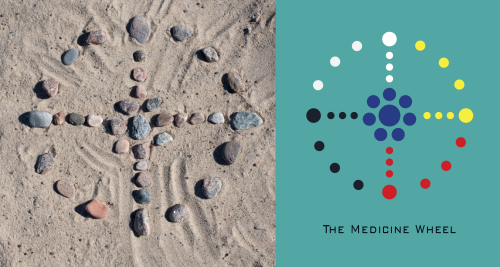
One of the most foundational frameworks shared across many Indigenous nations—including the Anishinaabe, Cree, Lakota, and Blackfoot, is the Sacred Hoop or Medicine Wheel. Unlike linear models that rank human needs in a hierarchical pyramid, the Medicine Wheel is circular. It gently reminds us that no single part of a human being operates in isolation.
The four quadrants of the wheel represent the physical, mental, emotional, and spiritual aspects of life. In this worldview, emotional or psychological distress is rarely viewed as a personal defect or an isolated illness. Instead, it is understood as a signal that the wheel has spun out of balance (Substance Abuse and Mental Health Services Administration [SAMHSA], 2020). If someone spends forty hours a week staring at a screen while neglecting their emotional connections or their spiritual need for awe, the whole wheel struggles to turn smoothly.
Nurturing the mental quadrant isn’t just about intellectual puzzle solving or cognitive restructuring. It involves honoring oral traditions, listening to stories, keeping curiosity alive, and engaging with the world mindfully. But just as importantly, it requires giving equal weight to the spiritual and emotional quadrants—whether that means stepping outside to touch the earth, practicing quiet gratitude at sunrise, or smudging to clear heavy energy. As Indigenous health scholars emphasize, true wellness is about cultivating internal alignment so that external harmony with the world can follow naturally (Redvers et al., 2020).
“All My Relations”: Healing Beyond the Self
If you’ve ever walked into a room where everyone felt like family, you’ve caught a glimpse of what Lakota people call Mitákuye Oyás’iŋ—frequently translated as “All My Relations.” In Native American perspectives, identity is fundamentally relational. You are not a solitary island trying to navigate a chaotic world on your own; you are an interconnected thread in a wide tapestry that includes your family, your ancestors, your community, the animals, the waters, and the land beneath your feet.
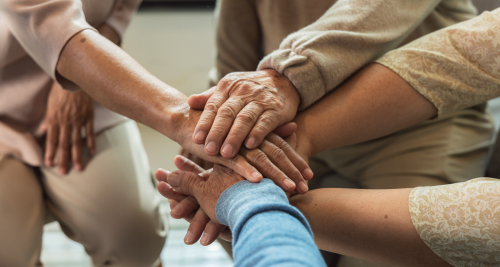
This relational mindset fundamentally changes how we think about mental health struggles. Isolation is one of the heaviest drivers of anxiety and depression in contemporary society. Indigenous approaches counter that isolation by weaving individuals back into the fabric of community. Healing doesn’t happen in a vacuum; it happens in relationship.
When a community member is hurting, the collective question isn’t simply, “How can we treat this individual’s symptoms?” It is, “How can we help this person recover their place in our circle?” Gathering for meals, participating in tribal dances, listening to elders, and serving others are not optional extracurricular activities, they are vital medicines. Joy and grief are shared, making light work of heavy hearts.
From Soul Wounds to Cultural Resilience
It is vital to speak honestly about the immense historical adversity Indigenous communities have faced. Decades of forced assimilation, displacement, and systemic oppression left deep scars. Psychologist Eduardo Duran (2006) introduced the term “soul wound” to describe this collective, intergenerational trauma, a concept that recognizes how historical pain can ripple down through generations.
Yet, what makes the Indigenous perspective so profoundly uplifting is where the story goes from there. It does not stop at trauma. Dr. Joseph P. Gone (2013, 2023), a prominent Aaniiih Gros Ventre psychologist and scholar, highlights that the true antidote to historical trauma is cultural reclamation and intergenerational resilience.
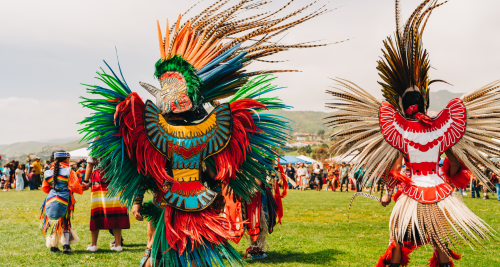
Rather than relying exclusively on Western clinical models that privatize suffering, Native communities are revitalizing traditional languages, ceremony, land-based practices, and community governance as primary vehicles for mental health. Research demonstrates that when Indigenous people connect deeply with their cultural heritage and sovereign traditions, psychological well-being and community strength increase significantly (Gone, 2013). The soul wound is healed through soul medicine, reclaiming identity, honoring ancestors, and stepping proudly into the future.
Bringing Indigenous Wellness Principles Into Daily Life
You don’t have to be Native American to learn from these timeless principles and integrate them into your own mental health journey. Here are grounded ways to bring this relational, circular approach into everyday life:

Check Your Wheel: When feeling drained or anxious, step back and evaluate all four quadrants. Have you been overworking your mind while starving your body of movement or your spirit of quiet reflection? Dedicate time to nurture whichever quadrant feels neglected.
Practice Active Relationality: Resist the urge to isolate when things get tough. Share a meal without screens, call a relative, or spend time serving someone else. Remember that your well-being grows when you help nurture the well-being of those around you.
Reconnect with the Earth: Nature isn’t just a backdrop for exercise; it’s a living source of renewal. Spend time outdoors without distractions. Listen to the wind, pay attention to the trees, and allow the natural world to ground your nervous system.
Focus on Strengths and Heritage: Shift your internal story away from “What is wrong with me?” toward “What strengths do I carry?” Reflect on the resilience of those who came before you and draw strength from your own capacity to endure and overcome challenges.
Native American perspectives on mental health offer a transformative, deeply uplifting alternative to modern clinical isolation by reframing psychological well-being as a holistic, interconnected harmony of spirit, mind, body, and community. Through sacred frameworks like the Medicine Wheel and the principle of relationality, healing is understood not as an isolated task of fixing personal deficits, but as a collective journey of restoring balance, reconnecting with the natural world, and honoring intergenerational resilience. By grounding our wellness in community connection, cultural identity, and respect for the earth, we uncover a sustainable pathway toward lasting emotional vitality and shared human flourishing.
References
Duran, E. (2006). Healing the soul wound: Counseling with American Indians and other Native peoples. Teachers College Press.
The Professional Counselor
Gone, J. P. (2013). Redressing American Indian historical trauma: Toward culturally grounded resilience. American Journal of Community Psychology, 52(3-4), 292–306. https://doi.org/10.1007/s10464-013-9598-7
Gone, J. P. (2023). Indigenous historical trauma: Alter-Native explanations for mental health inequities. Dædalus, 152(4), 148–161. https://doi.org/10.1162/daed_a_02032
Redvers, N., Yellow Bird, M., Quinn, D., Yunkaporta, T., & Arabena, K. (2020). Molecular decolonization: An Indigenous worldview framework for health promotion. Frontiers in Public Health, 8, 584914. https://doi.org/10.3389/fpubh.2020.584914
Substance Abuse and Mental Health Services Administration. (2020). Behavioral health services for American Indians and Alaska Natives (Treatment Improvement Protocol Series 61, HHS Publication No. SMA 18-5068). U.S. Department of Health and Human Services.
Blog Post Tags:
Related Blog Posts


Related Learning Labs


Related Resources
.
- Buscar Tratamiento de Calidad para Trastornos de uso de Sustancia (Finding Quality Treatment for Substance Use Disorders Spanish Version)
- Finding Quality Treatment for Substance Use Disorders
- Focus On Prevention: Strategies and Programs to Prevent Substance Use
- Monthly Variation in Substance Use Initiation Among Full-Time College Students
- The National Survey on Drug Use and Health (NSDUH) Report: Monthly Variation in Substance Use Initiation Among Adolescents