
Beyond the High: How Physical Movement Rewires Recovery and Reclaims Community
Anyone who has a substance use history or supported someone through it knows that early recovery isn’t just about removing a substance. It’s about rebuilding a depleted nervous system and finding grounded ways to feel human again. That is precisely where physical exercise stops being a simple fitness routine and becomes a daily anchor for mental health.
Rewiring a Depleted Brain
Substance use heavily impacts the brain’s reward system, leaving dopamine receptors downregulated and making ordinary days feel flat or overwhelming. Physical activity helps jumpstart the brain’s natural repair mechanisms. Research published by the National Institutes of Health (Lynch et al., 2013) highlights that aerobic exercise stimulates midbrain dopamine pathways and boosts Brain-Derived Neurotrophic Factor (BDNF), a protein essential for neuroplasticity. In plain terms, working up a sweat physically helps rebuild the brain’s capacity to manage stress, learn new coping habits, and experience natural joy.
Beyond brain chemistry, movement provides an immediate release valve for psychological distress. According to Harvard Health Publishing, regular exercise lowers stress hormones like cortisol while elevating GABA and serotonin. For individuals navigating early recovery, this shift in neurochemistry directly softens the sharp edges of anxiety, depression, and physical cravings that often trigger relapse.
Taking Recovery into the Open
While working out alone has clear benefits, moving together as a community adds something far more potent: social connection. Addiction thrives in isolation, but public wellness events break those walls down.
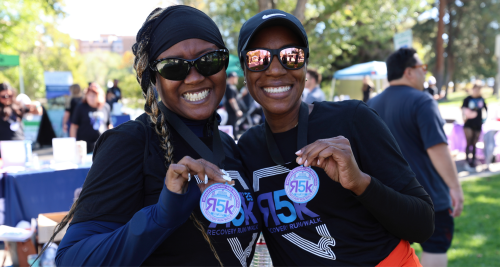
This is what makes community events like Nevada’s Recovery and Prevention’s (NRAP) annual R5K so impactful. Held every September at Idlewild Park, the R5K takes recovery out of clinical offices and puts recovery front and center in the public square.
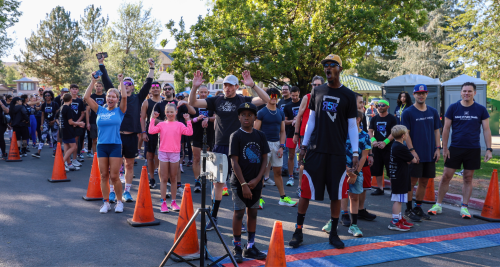
When students, campus faculty, people in long-term recovery, and local neighbors lace up their sneakers to run or walk together, the narrative shifts entirely. The Substance Abuse and Mental Health Services Administration (SAMHSA) continuously emphasizes that social connectedness and supportive community environments are essential pillars of sustained recovery. Crossing a finish line together proves to participants and observers alike that recovery is not a secret to hide, it is an active, joyful, and shared journey.
Whether it’s a quick morning walk or participating in the R5K, exercise gives individuals a tangible way to reconnect with their bodies, quiet their minds, and step confidently into a community that cheers them on every step of the way.
References
Costa, K. G., Cabral, D. A., Hohl, R., & Fontes, E. B. (2019). Rewiring the addicted brain through a psychobiological model of physical exercise. Frontiers in Psychiatry, 10, Article 600. https://doi.org/10.3389/fpsyt.2019.00600 Cited by: 61
Koohestani, A., Fathi, M., & Hejazi, K. (2021). The impact of aerobic training on some brain neurotransmitters and brain-derived neurotrophic factor in addicted women. Polish Journal of Sport and Tourism, 28(1), 13–18. https://doi.org/10.2478/pjst-2021-0003 Cited by: 1
Blog Post Tags:
Related Blog Posts


Related Learning Labs



Related Resources
.
- Buscar Tratamiento de Calidad para Trastornos de uso de Sustancia (Finding Quality Treatment for Substance Use Disorders Spanish Version)
- Finding Quality Treatment for Substance Use Disorders
- Focus On Prevention: Strategies and Programs to Prevent Substance Use
- Monthly Variation in Substance Use Initiation Among Full-Time College Students
- The National Survey on Drug Use and Health (NSDUH) Report: Monthly Variation in Substance Use Initiation Among Adolescents