
The Anti-Resolution: Why We’re Ditching the "New Year, New Me" Checklist
Every December 31st, the world collectively holds its breath. We are sold a very specific, shiny promise: that when the clock strikes midnight, we can magically shed our old selves like a snake skin. We are told to set rigid goals, create punishing gym schedules, and overhaul our entire personalities.
For those of us in recovery or navigating mental health journeys, this pressure isn’t just annoying, it can be toxic. The “New Year, New Me” mentality relies on the premise that who you are right now isn’t good enough. It sets up a binary system of Pass/Fail. And if there is one thing known about recovery, it’s that binary thinking is dangerous.
This year, we are proposing a gentler alternative. Rejecting the high-pressure resolution in favor of the Anti-Resolution. Here is why we are trading grand plans for small intentions, subtraction, and present-moment living.
1. Intentions Over Goals: The Compass vs. The Map

The traditional resolution is a map with a specific destination: “I will lose 20 pounds,” or “I will read 50 books.” The problem with maps is that if you take a wrong turn eat a cookie, miss a week of reading, you feel lost. You feel like a failure.
Instead, consider setting an Intention or a Theme for your year.
Think of an intention not as a map, but as a compass. A compass doesn’t tell you exactly where you will be on February 12th, but it keeps you heading in the right direction. For example, instead of a rigid goal like “I will never say ‘yes’ to social events I don’t want to go to,” try a Theme: “The Year of Boundaries.”
If you slip up and over-commit, you haven’t “failed” your year. You just check your compass, realize you drifted, and gently steer back toward your theme.
Research supports this shift in mindset. According to a study published in the Journal of Clinical Psychology, while 46% of people who made resolutions were successful, those who focused on “approach-oriented” goals (moving toward a positive outcome or feeling) rather than “avoidance-oriented” goals (stopping a behavior) reported significantly higher wellbeing and success rates (Norcross et al., 2002). An intention allows for flexibility and self-compassion, two critical ingredients for sustained mental wellness.
2. The Art of the “Un-Resolution”

Self-help culture is obsessed with addition. Do more yoga. Drink more water. Hustle harder. But for those of us with anxiety or busy minds, “more” often just feels like “heavy.”
What if, instead of adding to your to-do list, you focused on your Stop-Doing list?
This is the art of the Un-Resolution. It is the process of chipping away at the things that no longer serve you to reveal the peace that was underneath all along. It is a concept deeply rooted in the philosophy of Via Negativa—improving your life by subtraction.
Your “Un-Resolution” list might look like this:

I am un-resolving “Fine.” I will stop saying “I’m fine” when I am actually struggling.

I am un-resolving the scroll. I will stop taking my phone into the bedroom at night.

I am un-resolving performative busyness. I will stop apologizing for resting.
By removing these stressors, you create a void. In recovery, we are often terrified of the void, rushing to fill it with noise or substances. But as mental health experts note, allowing space for rest and “non-doing” is essential for nervous system regulation. Dr. Saundra Dalton-Smith, author of Sacred Rest, emphasizes that rest is not just sleeping, but a deliberate practice of ceasing work and sensory input to allow the body to repair (Dalton-Smith, 2017).
3. One Day at a Time vs. One Year at a Time
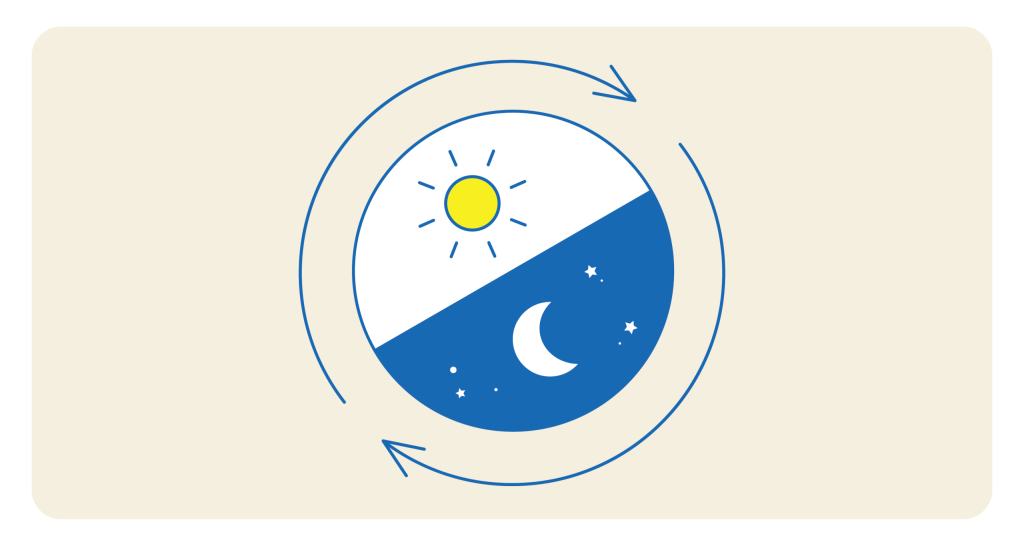
Perhaps the most dangerous trap of New Year’s is the sheer scale of it. Asking someone to commit to 365 days of anything is a recipe for anxiety.
Imagine trying to carry 365 bricks at once. You would collapse. That is what a yearly resolution feels like. Now, imagine carrying just one brick. You can do that. That is today.
The “24-hour principle” is the bedrock of 12-step recovery for a reason. It works. When we “future-trip” obsessing over where you will be in July or imagining a year without our coping mechanisms, our cortisol levels spike. You are trying to solve problems that haven’t happened yet.
This year, try “micro-dosing” your goals. Don’t promise to be sober for all of 2025. Just promise to stay sober today. Don’t promise to cure your depression this year. Just promise to take your meds this morning.
A study in Cognitive Therapy and Research highlights that present-moment awareness (mindfulness) significantly reduces symptoms of anxiety and depression by disengaging individuals from repetitive negative thoughts about the past or future (Hofmann et al., 2010). By keeping your eyes on the 24 hours in front of you, you reclaim your power.
The Takeaway
If the ball drops on New Year’s Eve and you don’t have a grand plan, you aren’t behind. You are protecting your peace.
This year, you don’t need a “New You.” The “Old You” the one who survived 100% of your bad days, the one who is still standing, the one who is reading this right now is worthy of love, exactly as you are.
So, set a compass direction. Subtract the noise. And take it one brick at a time.
Sources
- Norcross, J. C., Mrykalo, M. S., & Blagys, M. D. (2002). Auld lang syne: Success predictors, change processes, and self-reported outcomes of New Year’s resolvers and nonresolvers. Journal of Clinical Psychology, 58(4), 397-405.
- Dalton-Smith, S. (2017). Sacred Rest: Recover Your Life, Renew Your Energy, Restore Your Sanity. FaithWords.
- Hofmann, S. G., Sawyer, A. T., Witt, A. A., & Oh, D. (2010). The effect of mindfulness-based therapy on anxiety and depression: A meta-analytic review. Journal of Consulting and Clinical Psychology, 78(2), 169–183.
Blog Post Tags:
Related Blog Posts




Related Learning Labs




Related Resources
.
- Buscar Tratamiento de Calidad para Trastornos de uso de Sustancia (Finding Quality Treatment for Substance Use Disorders Spanish Version)
- Finding Quality Treatment for Substance Use Disorders
- Focus On Prevention: Strategies and Programs to Prevent Substance Use
- Monthly Variation in Substance Use Initiation Among Full-Time College Students
- The National Survey on Drug Use and Health (NSDUH) Report: Monthly Variation in Substance Use Initiation Among Adolescents