
Sober Cheer: Navigating the Holidays in Recovery
The time between Thanksgiving and New Year’s is supposed to be all sparkle and smiles. But for many folks working hard to maintain their sobriety, the holidays can feel like a minefield of excitement, stress, and emotional triggers. From family gatherings to parties where alcohol is flowing, this season can be totally overwhelming. Let’s look at why the holidays are such a tricky time and how you can manage them without losing your peace.
The Seasonal Pressure Cooker
It’s not just your imagination—there’s more substances cheverywhere during the holidays. Data from the CDC shows that alcohol use spikes dramatically between Thanksgiving and New Year’s Day (CDC, 2024). You see the impact of this everywhere: more drunk driving arrests and extra emergency room visits related to substance use during late December.
While those numbers cover everyone, they clearly show that the environment itself gets saturated with substances and social pressure. For someone in recovery, this just makes the challenge more difficult.
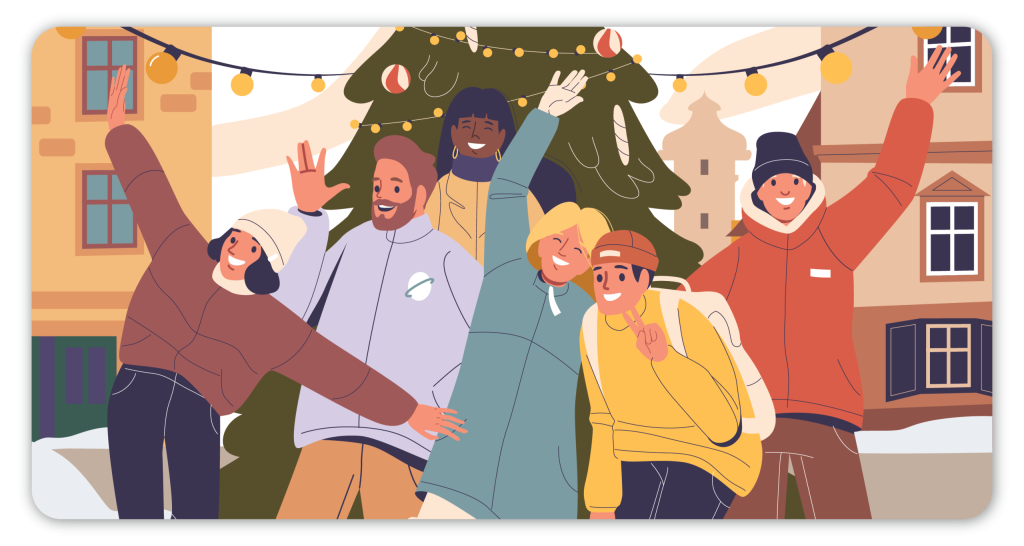
Research confirms these concerns. Studies have found that holidays like Christmas and New Year’s Eve are some of the heaviest drinking days of the year (Kushnir & Cunningham, 2014). What’s more, people tend to let their guard down. They use fewer protective strategies, like limiting their intake or avoiding risky settings, during holidays compared to a normal weekend (Ehlke et al., 2020). When caution drops and temptation rises, the risk of a slip-up naturally goes up, too.
For people in recovery, the holidays also mess with the stable routines and support systems that keep them grounded. Traveling, dealing with family dynamics, or even just feeling lonely or grieving can make it hard to stay on track. This is why staying engaged with your support network—whether that means meetings, your recovery community, or just checking in with trusted people—is so important for long-term sobriety (Witkiewitz et al., 2020). Connection is one of your strongest tools during high-risk times.
Practical Strategies for Staying Grounded
Fortunately, there are a lot of simple, smart moves you can make to protect your sobriety and still enjoy the season. Here are some practical strategies to help you navigate the holiday season:

Stick to a basic routine: Try to keep your sleep and meal schedules somewhat regular. Stability, even small doses of it, supports emotional balance.

Set firm boundaries: Be honest with yourself about which events you should attend, and don’t feel guilty about deciding how long you’ll stay. It’s okay to say “no” or leave early!

Bring your own non-alcoholic drink: Showing up prepared with your favorite festive mocktail means you always have a safe option in hand and you avoid being constantly offered a drink.

Identify a recovery ally: Before you go to an event, make a plan to text or call a trusted friend or sponsor if you start feeling anxious or tempted.

Create an exit plan: Have your car keys, a planned excuse, and the mental permission to leave instantly if a moment becomes too tough or triggering.

Utilize extra support meetings: Check the schedules for your recovery group (AA, NA, etc.). Many offer extra meetings or even 24-hour options during the holidays.

Try new, sober traditions: Make the season meaningful without substances by volunteering, hosting a casual sober gathering, or exploring a new winter hobby with supportive friends.
Staying sober through the holidays is a big deal. It takes intention, honesty, and self-compassion. The goal isn’t to be perfect, but to stay present, grounded, and connected. With a solid plan and an awareness of the risks, you can absolutely enjoy the season in ways that feel healthier and more authentic than ever before.
References
Centers for Disease Control and Prevention. (2024). Alcohol and public health: Alcohol-
related harms. https://www.cdc.gov/alcohol
Ehlke, S. J., Schick, M. R., Davis, J. P., & Haas, A. L. (2020). Event-specific drinking
and protective behavioral strategies: A comparison across holidays and
celebrations. Addictive Behaviors Reports, 11, 100263.
https://doi.org/10.1016/j.abrep.2020.100263
Hagan, L., & Crilly, J. (2023). Alcohol-related presentations to emergency departments
on holidays and social events: An integrative review. Australasian Emergency
Care, 26(2), 146–154. https://doi.org/10.1016/j.auec.2022.07.006
Kushnir, V., & Cunningham, J. A. (2014). Event-specific drinking in the general
population. Addictive Behaviors, 39(1), 174–181.
https://doi.org/10.1016/j.addbeh.2013.09.007
Witkiewitz, K., Pearson, M. R., Hallgren, K. A., Kirouac, M., Roos, C. R., Kranzler, H. R.,
… Maisto, S. A. (2020). Who achieves nonabstinent recovery from alcohol use
disorder? A 10-year longitudinal study. Alcoholism: Clinical and Experimental
Research, 44(1), 241–251. https://doi.org/10.1111/acer.1424
Blog Post Tags:
Related Blog Posts


Related Learning Labs



Related Resources
.
- Buscar Tratamiento de Calidad para Trastornos de uso de Sustancia (Finding Quality Treatment for Substance Use Disorders Spanish Version)
- Finding Quality Treatment for Substance Use Disorders
- Focus On Prevention: Strategies and Programs to Prevent Substance Use
- Monthly Variation in Substance Use Initiation Among Full-Time College Students
- The National Survey on Drug Use and Health (NSDUH) Report: Monthly Variation in Substance Use Initiation Among Adolescents