Finding Your Tribe: The Rise, Role, and Radical Impact of Recovery Community Organizations
For a long time, the mainstream narrative around overcoming substance use disorder looked a lot like a clinical conveyor belt: you realize there is a problem, you go to detox, you check into a residential treatment center, and then… well, you are largely left to figure out the rest on your own. It treated a lifelong, chronic journey like an acute medical event.
Thankfully, the landscape of recovery has evolved. Enter Recovery Community Organizations (RCOs)—the grassroots, peer-led powerhouses that are fundamentally changing how we approach long-term recovery. If you have ever wondered how these organizations came to be, where they fit into healthcare, and why they are so incredibly effective, you are in the right place.
From Grassroots to National Movement: A Brief History of RCOs
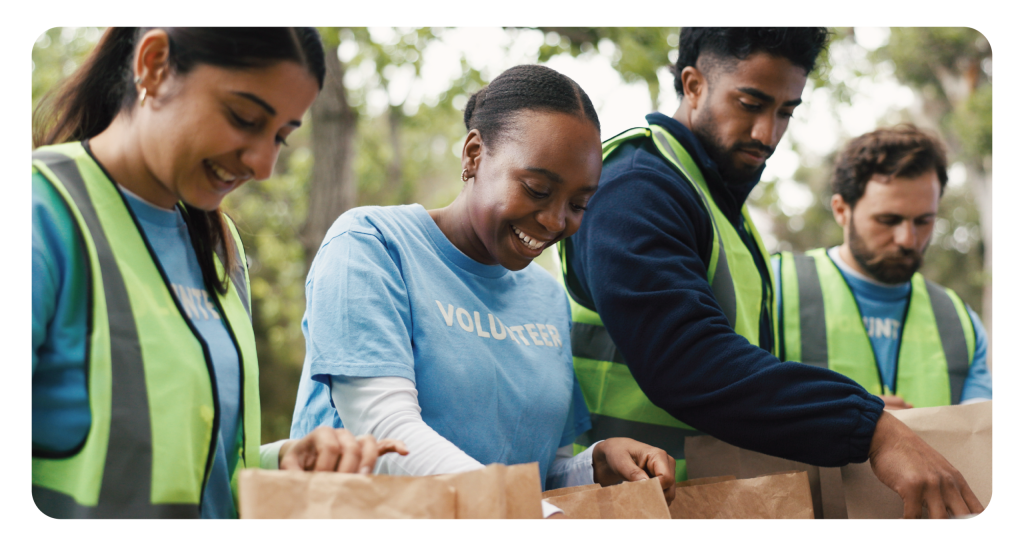
RCOs did not just pop up overnight because a government agency thought they sounded like a good idea. They were born out of absolute necessity. Historically, communities turned to mutual aid networks like 12-step programs to find support, but by the late 1990s and early 2000s, a broader advocacy movement began to take shape (Stack et al., 2022).
The official launchpad for the modern RCO movement occurred in 2001 at a historic summit in St. Paul, Minnesota, which led to the founding of Faces & Voices of Recovery (Faces & Voices of Recovery, 2021). This marked the dawn of the New Recovery Advocacy Movement. People in recovery, along with their families and allies, decided it was time to step out of the shadows, put a visible face on recovery, and actively dismantle the systemic stigma surrounding addiction. Pioneers like the Connecticut Community for Addiction Recovery realized that to truly support individuals, communities needed independent, non-profit hubs dedicated entirely to localized advocacy, education, and peer support (Connecticut Community for Addiction Recovery [CCAR], 2007).
Bridging the Gap: RCOs in the Continuum of Care
To understand the role of an RCO, it helps to look at the continuum of care—the complete spectrum of health services an individual might need, ranging from early intervention to intensive treatment and long-term management.
Clinical treatment (like therapy and medical detox) is excellent at stabilization, but it is temporary. RCOs step in to provide the critical, long-term infrastructure that bridges the gap between formal treatment and everyday life. Because recovery does not happen in a vacuum, peer recovery support services are increasingly integrated across the entire continuum—stretching into hospitals, emergency departments, the criminal justice system, and local communities (Stack et al., 2022).
An RCO serves as a community anchor. It is a safe place an individual can turn to before they enter treatment, a supportive ally while they are in treatment, and a lifelong anchor long after clinical services have ended (CCAR, 2007).
The Secret Sauce: What Makes RCOs Different?
If RCOs aren’t clinical treatment centers and they aren’t just standard AA or NA meetings, what makes them so unique? It comes down to a few core pillars:

Authenticity of Voice: RCOs are strictly led, governed, and staffed by representatives of the local recovery community (CCAR, 2007). There are no clinical hierarchies here; it is entirely operated by people who have walked the walk.

All Pathways are Valid: Traditional mutual aid groups often emphasize one specific philosophy. RCOs, however, are explicitly “pathway-agnostic.” Whether an individual’s journey involves 12-step programs, secular approaches, spiritual practices, harm reduction tactics, or medication-assisted recovery, they are welcomed and celebrated (CCAR, 2007).

Non-Clinical Focus: You won’t find doctors diagnosing pathologies or counselors writing treatment plans inside an RCO. Instead, the focus is entirely on peer-based recovery support services (P-BRSS), which build on an individual’s strengths rather than focusing on their deficits (Horn et al., 2025).
Boosting “Recovery Capital”: The Impact on Long-Term Wellness
The ultimate goal of an RCO is to help individuals build what researchers call recovery capital—the internal and external resources a person can leverage to initiate and sustain long-term recovery (Horn et al., 2025). This includes physical resources (like safe housing and health), human resources (like values and life skills), and social resources (like a supportive peer network).
By matching participants with peer recovery coaches and hosting pro-social community events, RCOs have a massive, tangible impact on people’s lives. Research indicates that engaging with peer support services significantly improves a person’s quality of life and leads to several positive outcomes:

Greater Housing Stability: Helping individuals secure and maintain safe places to live (Stack et al., 2022).
Reduced Return to Use: Providing the ongoing accountability needed to prevent relapses or manage them safely if they occur (Horn et al., 2025).
Decreased Emergency Room Visits: Connecting individuals with preventative healthcare resources rather than crisis-driven care (Stack et al., 2022).

Lower Criminal Justice Involvement: Diverting individuals away from the legal system and toward productive, community-centric lives (Horn et al., 2025).
At the end of the day, RCOs prove that recovery is not just about surviving or abstaining from a substance—it is about thriving in a community that genuinely understands and supports your journey.
References
Connecticut Community for Addiction Recovery. (2007). What is a recovery community organization? https://ccar.us/wp-content/uploads/The_Recovery_Community_Organization_2007.pdf
Faces & Voices of Recovery. (2021). Our history. https://facesandvoicesofrecovery.org/about/history/
Horn, K., Flinn, R. E., Hagaman, A. M., Zajac, K., Hoffman, L. A., Poulsen, M. N., Cioffi, C. C., Jean-Berluche, D., Spana, E., & Hibbard, P. F. (2025). Systematizing peer recovery support services for substance use disorder: A taxonomy for measuring recovery milestones. Frontiers in Public Health, 13, Article 1529078. https://doi.org/10.3389/fpubh.2025.1529078
Stack, E., Hildebran, C., Leichtling, G., Waddell, E. N., Leahy, J. M., Martin, E., & Korthuis, P. T. (2022). Peer recovery support services across the continuum: In community, hospital, corrections, and treatment and recovery agency settings–A narrative review. Journal of Addiction Medicine, 16(1), 93–100. https://doi.org/10.1097/ADM.0000000000000810
Blog Post Tags:
Related Blog Posts



Related Learning Labs



Related Resources
.
- Buscar Tratamiento de Calidad para Trastornos de uso de Sustancia (Finding Quality Treatment for Substance Use Disorders Spanish Version)
- Finding Quality Treatment for Substance Use Disorders
- Focus On Prevention: Strategies and Programs to Prevent Substance Use
- Monthly Variation in Substance Use Initiation Among Full-Time College Students
- The National Survey on Drug Use and Health (NSDUH) Report: Monthly Variation in Substance Use Initiation Among Adolescents